Friday, 29 May 2015

Order out of Chaos


At a particular primary school in New Zealand, they examined relaxing rules around recess. Climbing trees is ok, skateboarding is ok, bullrush is ok, even playing around the scrapheap around the back of the school is ok. The children, lost in their play, now that they were allowed to play to their heart's content, have ended up having no time for bullying, graffiti, or vandalism. 

As a result, the number of teachers on duty can also be decreased and, according to the principal, “The school is in a state of chaos, but no-one gets hurt!”. Even though “dangerous” play is allowed, the number of injuries is in decline and, in the classroom, motivation and concentration levels are on the up. A trial done as part of a university study showed how effective this was and, at this school, the relaxation of the rules continued...

Now, as someone from the older generation, I feel like “It's got to the point where they can't even climb trees?”. But nowadays, parents' conceptions of danger have changed and once something's “dangerous”, it not easy to re-instate it. It takes real courage for a principal with charge over however many hundreds of students to make a decision like this.

If you want to manage a large group of people, especially if they’re young kids, the most effective way is to start by restricting their range of activities and reduce their degree of freedom. That’s reasonable…


           If we do that, it's easy to keep an eye on them and they'll have fewer accidents
And, we'll put in all sorts of rules and keep the people that break them under control
And everyone else will be behaving according to the rules, and then we can be “at peace”
         

But people whose activities are restricted and are constrained by rules are the complete opposite of “at peace”. Their hearts, far from being peaceful, are filled with a smouldering frustration and who knows when it's going to erupt. When things are like that, there's no way they can concentrate and their motivation becomes trapped.

And of course we all want to be free to do the things we want to do.

“But, if we let people run wild, isn't it going to be a complete debacle?”
For a manager, such a situation would mean a complete failure and it is terrifying.

Recently, even in the workplace, instances of managing employee behaviour have been increasing, utilising a whole host of brand new technologies. A delivery company in America has been radically increasing its profits by closely monitoring its drivers' behaviour. For these drivers, even tiny delays are to be kept under control, even the time it takes to remove their seat belt, and so some of them drive without wearing them.

With truck drivers, they're outdoors and they're friends with their regulars on their delivery rounds and at one point it was a popular industry. But now that it's become micro-managed down to the second, a lot of them are plagued with injuries, illness...and even divorce. I feel like saying “If that's the kind of trust you have in your employees, how about you quit being a boss?” Isn't “being able to feel like you are trusted” part of “job satisfaction”?

If we're afraid of chaos, it's because we have no faith in the order of the universe. Perhaps that principal is entrusting the safety of those children to something greater. Otherwise, where's the guarantee that, if they fall out of a tree, they're not going to break any bones, that they're not going to catch tetanus from a rusty nail, and that when one of them gets tackled in a game of bullrush, it’s all going to be ok?,

At first glance, the school grounds are hugely chaotic, but in reality, a mysterious order is being kept. From this comes true peace of mind.


[You can find the original post 「混沌の中の秩序」in Japanese here.]


Tuesday, 28 April 2015

A Gift called “Meditation Time”


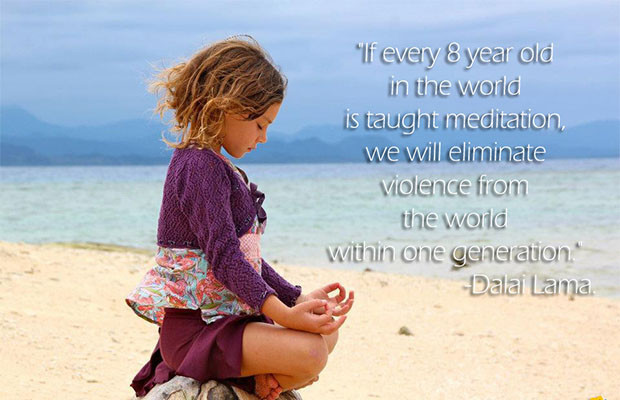
When a public middle school in San Francisco implemented meditation time, truancy and suspension rates went down, college admission rates went up, and the most incredible thing is that the number of students there feeling “happy” became the highest in the city. Even though this school is incredibly rough, and exists in a world where bullets fly on a daily basis, after providing 15 minutes of Quiet Time twice every day, a variety of changes became apparent, and now their attendance rate has gone up to 98%.

 feature_image_template140-620x400.jpg
 
Following their example and having trialed offering meditation time, neighbouring schools have had similar results!

Only in the hippie mecca of California can you throw around a word like “meditation” in a public school, which has the principle of the separation of church and state. But, if you look at their pamphlets that say “Please feel completely free to try implementing this in your school”, they say QT is ok even without meditation. They can quietly read a book, or draw – there's no compulsion to “meditate”. But, twice a day at school, they enter into silence, separate from the usual hustle and bustle and share in that quiet time. Phones, txts, music, videos...they stop everything and both teachers and students quietly turn to face themselves.

The various effects of meditation are being scientifically proven. Wouldn't it be great to make it a daily habit starting from when we're kids? I've been meditating for about 15 years now, but if I’d been doing it with other kids, like at this school, my life might have been different... But, even if you're a grown-up, it's not too late!

My meditation is about deepening my connection with the Heavens (the universe, God, Buddha, a higher power). Thanks to just 15 minutes of meditation in the morning and at night, little by little, my fears have been melting away. What I’m really grateful for is that, despite everything that happens in life, I can feel that “no matter what happens, it's ok”. Even in situations where my brain tells me things are not ok, at the depths of my soul, I feel – no, it is ok. There’s no rational explanation, but an inner knowing, for which I am grateful.

When you're at peace, your intuition gets sharper and your capabilities and creativity shine through better. It's time where the ability to receive unforeseen insights fills the quiet calm. For those middle school students in San Francisco, perhaps it’s because their anxiety abated and the power that they’d had all along then sprang forth that their attendance and their grades both went up. Meditation stills feelings of anxiousness and brings us peace. One high school student recalled that before he started meditation, he was always angry and he would be picking fights, not caring about anyone. But now he's mellowed out so much, that he gets told by his friends that the guy he was then, he's a different person.

With 30 minutes of meditation a day, students will change, schools will change, society will change. Anyone anywhere can do it. You don't need any tools and it doesn't cost a thing. Meditation time is a gift from Heaven, given to all of us equally. May the day soon come when the children of the world can receive this gift.

[You can find the original post 「瞑想の時間」という贈り物 here.]

Sunday, 29 March 2015

Cutting out refined sugar


I went to pick up my two and a half year old grandson from daycare just as they were having afternoon tea. Everyone was gathered around tables, enjoying their snacks they'd each brought from home. My grandson's snacks that day were some grapes and some cheese and crackers. When he saw my face, he picked off a grape, offered it up to me, and gave me a big happy smile. Sitting down next to my grandson, who wasn't in any rush, I looked around, and while some of the kids had fruit or sandwiches, it was mostly biscuits, lollies, chocolate...The girl next to me had a bag, which she asked me to open, filled with lumps of sugar.

Typical sweets things from New Zealand

Why would you give such sweet things to little kids?

There's a dentist at a hospital in a small town in the South Island calling for us to put high taxes on sugary drinks. He says that for kids under five having cavities removed, most cases are because of things like juice with added sugar and sugary snacks. “One day, after finishing a surgery removing a total of 54 cavities, I looked out the window and there was Coca Cola delivery van heading to the hospital... Even though we were successful at getting an end put to the direct sale of coke inside the hospital, if you take one step outside onto the streets, they're overflowing with sugar riddled drinks and snacks. What's more, you can get a drink with added sugar for one third the price of a 100% fruit juice. They're cheap, so we buy them. If that's the case, to get people to not buy them, we should make them expensive”.

It was the same with cigarettes. For a while now, we've publicised the harm caused by cigarettes, we've made workplaces and public transport, and all bars and restaurants smokefree, we've hidden cigarette displays in shops – we've tried every strategy, which have each had an effect in their own way. But, in the end, nothing has done as much as applying heavy taxes, shutting off for young people the road to temptation of cigarettes, and stopping smokers, who are forced into a position where “they're so expensive I can't afford them”.

 "The price is the key driver, it's the most effective policy we have for driving down smoking rates" - Dr Marewa Glover of End Smoking NZ. Photo / File

But despite that, when asked for his opinion, the Associate Health Minister declared “we should educate people that sweets are bad for their teeth, and make sure people are brushing their teeth both morning and night”, and dismissed the proposal to levy a tax on drinks with added sugar by saying “It won't have any effect”.

How can the profits of the food industry be more important than the nation's health?

With such things being able to be said publicly, perhaps even the Minister himself isn't really aware of the harm caused by sugar. Having a three-course dinner including a sweet dessert, having a taste for fine wine, enjoying delectable sweets – these are a kind of status symbol. In the past, these sorts of things were the sole privilege of the upper classes. But, because of that, problems like obesity and age-related diseases have only gotten worse in “developed countries”. There is an apparent connection between the prevalence of refined sugar and a variety of allergies that didn't exist in the past – my hay-fever was like that. When I moved to this country, it was so bad, and I was taking medicine for months on end. But then I heard somewhere that I should cut out refined sugar, tried putting it into practice, and I got rid of it completely.

The harm caused by refined sugar manifests not only in physical issues, but in psychological ones as well... You get restless, distracted, irritable, you get worn out quickly, you're unmotivated.  Refined sugar throws out your equilibrium and sucks away your life force.

Getting little children to eat something so dangerous is pretty much criminal. The thought “I want to eat ice-cream” doesn't occur to two year-olds , and it's not until they get given some by an adult that they'll get to know that taste... But once a child has given into that sweet temptation, they look for stronger hits and they get hooked.  

At the very least, until they get to an age where they can go to the shops with their own money, let's stop feeding our kids refined sugar. But if we want this, we adults have to stop doing this ourselves first. You might think at first “But they're so delicious! There's no way I can give this stuff up!!”. But there's a mountain of people who say “Giving it up was great!” When you start abstaining from refined sugar, your palate re-equilibrates and you become able to enjoy the natural sugars in vegetables, fruits and grains. Then, if you're given a heavily sugared chocolate or something, just to taste, it will feel horrible and sickly. Even that dentist's son (who's in primary school) said, “I had only mouthful of coke, and it was too sweet. It was horrible”.

I've cut out refined sugar a number of times, but this time I'm trying to go all out. So, even when I cook Japanese food, I no longer  use any sugar at all. Even without sugar, I can get enough deliciousness from the umami in the dashi and the sweetness of the vegetables, and I've rediscovered the subtlety and sweetness in seasonings like real soya sauce, miso, mirin, and sake.


Seasonings recommended by Yoshimi Nakagawa from Cooking for a Joyful Life

There's no limit to the effects of cutting out refined sugar – you sleep well, your skin clears, it reduces puffiness in the face, it improves eyesight, it relieves poor circulation, neck stiffness, and period pain, it eliminates irritability, it improves concentration and motivation, and more. And, it's of course a delight that it reduces fat. Excess sugar turns into flab, but that refreshing feeling when that flab is gone.... hey, it's danshari*!

Let's simply let go of excess and live lightly


A cake using a natural sweetener called stevia


*Danshari is a recently coined Japanese word made up of three kanji characters meaning "to refuse", "to dispose" and "to separate" respectively. While translatable as "decluttering", it can be understood as having a psychological element, and can relate not only to one's possessions and environment, but also physiological, mental and emotional decluttering.

[You can find the original post 「白砂糖を断つ」in Japanese here.]